
Running a pharmacy involves much more than dispensing medication—it also requires managing finances, paying taxes, and ensuring that the business operates within the law. One crucial aspect of this is understanding what business expenses are tax-deductible, as it can have a significant impact on your bottom line.
Pharmacies, like any other business, can claim a range of expenses to reduce taxable income, but many business owners don’t always take full advantage of available deductions. In this blog, we’ll break down which expenses are tax-deductible for pharmacies, ensuring that you’re making the most of your tax savings.
1. What Are Business Expenses?
Business expenses are the costs incurred during the normal course of running your pharmacy. These can include a wide range of costs, from purchasing inventory to paying for insurance. In the context of tax, business expenses reduce the amount of taxable profit your pharmacy generates, which in turn lowers the amount of tax you owe. Need help?
2. Inventory and Stock Expenses
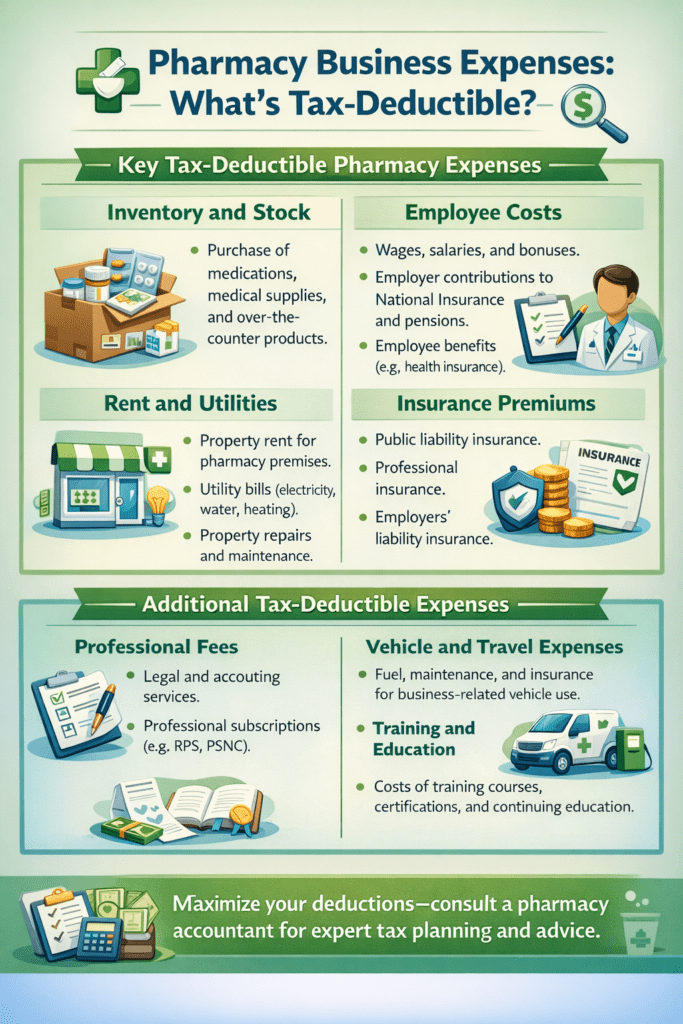
The most significant expense for most pharmacies is inventory, which includes medications, medical supplies, and over-the-counter products. Pharmacies can deduct the cost of purchasing inventory as part of the cost of goods sold (COGS). This is one of the largest deductions you can claim.
- Inventory Costs: The cost of purchasing drugs and medical supplies directly from suppliers is tax-deductible. If your pharmacy carries a large number of over-the-counter products, these too are considered part of your inventory.
- Stock Losses: If inventory is damaged, stolen, or spoiled, it can also be written off as a business loss. Keeping detailed records of inventory levels and any losses is essential for maximizing deductions.
3. Employee Salaries and Wages
If your pharmacy employs staff—whether it’s pharmacists, technicians, or clerical support—the cost of their wages and salaries is tax-deductible.
This includes:
- Basic salaries for employees.
- Employer contributions to pension schemes or National Insurance.
- Bonuses and commissions earned by your team.
- Employee benefits, such as health insurance or paid time off.
As an employer, you must also comply with PAYE (Pay As You Earn) tax schemes, ensuring that taxes are deducted from your employees’ wages and remitted to HMRC. The cost of complying with PAYE is also deductible.
4. Rent and Utilities
For most pharmacies, renting a physical location is a significant expense. Whether you’re leasing a space in a busy high street or renting office space in a healthcare complex, rent is fully tax-deductible.
Other deductible costs related to the property include:
- Utilities: Electricity, water, and heating costs.
- Repairs and maintenance: Costs for maintaining your property and keeping it in good working order.
- Business rates: Depending on the location of your pharmacy, you may be liable for business rates, which are also tax-deductible.
It’s crucial to ensure you’re tracking these expenses accurately to claim the appropriate deductions.
5. Professional Fees and Subscriptions
As a pharmacy business owner, you’re likely to incur various professional fees throughout the year. These include:
- Accountants and tax advisors: Any fees you pay for professional accounting or tax services are tax-deductible.
- Legal fees: If you have legal consultations or require legal assistance (such as contract creation or dispute resolution), these costs are also deductible.
- Professional subscriptions: Memberships to professional organizations, such as the Royal Pharmaceutical Society or Pharmaceutical Services Negotiating Committee (PSNC), are tax-deductible.
Being a member of professional associations is beneficial for staying informed and compliant, and the associated costs can be claimed as business expenses.
6. Insurance Premiums
Pharmacy owners are required to carry various types of insurance to protect both their business and employees. These premiums are generally tax-deductible, including:
- Public Liability Insurance: Coverage against third-party claims of injury or property damage.
- Professional Indemnity Insurance: Essential for pharmacists, this insurance protects against legal claims for professional mistakes.
- Employers’ Liability Insurance: Required if you have employees, this covers you in the event of workplace injuries.
These premiums are essential for safeguarding your pharmacy against potential risks and can be deducted from your taxable income.
7. Medical Equipment and Supplies
The cost of purchasing medical equipment and supplies necessary for running a pharmacy is tax-deductible. This includes:
- Pharmaceutical equipment (e.g., pill counters, scales, and refrigeration units).
- Office equipment (e.g., computers, printers, and phones).
- Safety equipment (e.g., fire extinguishers, first aid kits).
In some cases, you may be able to claim capital allowances on larger items, such as medical machinery or major office equipment, which provides additional tax benefits.
8. Advertising and Marketing Costs
As a pharmacy, advertising and marketing play an important role in promoting your business and attracting customers. These expenses are deductible, including:
- Website development and ongoing maintenance costs.
- Advertising fees for print, digital, or broadcast ads.
- Promotional events that generate business, such as health seminars or local health checkup days.
Investing in marketing helps grow your customer base, and the costs associated with these efforts can be deducted from your taxable income.
9. Vehicle Expenses
If you use a vehicle for business purposes—whether it’s for deliveries, visiting clients, or running errands related to your pharmacy—you can claim vehicle expenses as tax-deductible. This includes:
- Fuel costs.
- Maintenance and repairs.
- Insurance premiums.
If the vehicle is used for both personal and business purposes, you’ll need to apportion the costs accordingly. For more accurate calculations, it’s advised to keep detailed mileage logs and receipts.
10. Training and Continuing Education Costs
As a pharmacy business owner, it’s crucial to keep up with ongoing education and training to stay compliant with regulations and maintain your professional skills. The costs of training courses, certification programs, and continuing education are tax-deductible as long as they directly relate to your business activities.
This could include:
- Pharmaceutical training for your staff.
- Continuing education to meet licensing requirements.
- Professional development courses to improve business management skills.
Frequently Asked Questions
What business expenses can I claim as a pharmacy owner?
You can claim a wide range of business expenses as tax-deductible, including inventory costs, employee wages, rent, utilities, professional fees, insurance premiums, medical equipment, marketing, and vehicle expenses. Keep detailed records of all expenses for accurate tax filing.
Can I claim expenses for training and professional development?
Yes, the costs for training programs, certifications, and continuing education related to your pharmacy business are tax-deductible, as long as they are directly related to your business activities.
Are vehicle expenses deductible for my pharmacy business?
If you use a vehicle for business purposes, such as making deliveries or visiting clients, you can claim vehicle expenses such as fuel, maintenance, and insurance. Be sure to keep accurate records to support these claims.
Can I deduct the cost of my pharmacy insurance premiums?
Yes, premiums for public liability, professional indemnity, and employers’ liability insurance are tax-deductible for pharmacy businesses.