
Financial Considerations for Healthcare Professionals:
For doctors, dentists, consultants, nurses, and allied healthcare professionals, few financial decisions carry as much long-term impact as pension planning. One of the most common — and complex — questions we hear is: is it worth staying in the NHS Pension Scheme?
With contribution rates, tax rules, and retirement flexibility continuing to evolve, understanding the real value of the NHS Pension is essential. In this guide, we break down how the scheme works, the financial pros and cons, when opting out might make sense, and how healthcare professionals can make informed, strategic decisions about their retirement future.
Understanding the NHS Pension Scheme
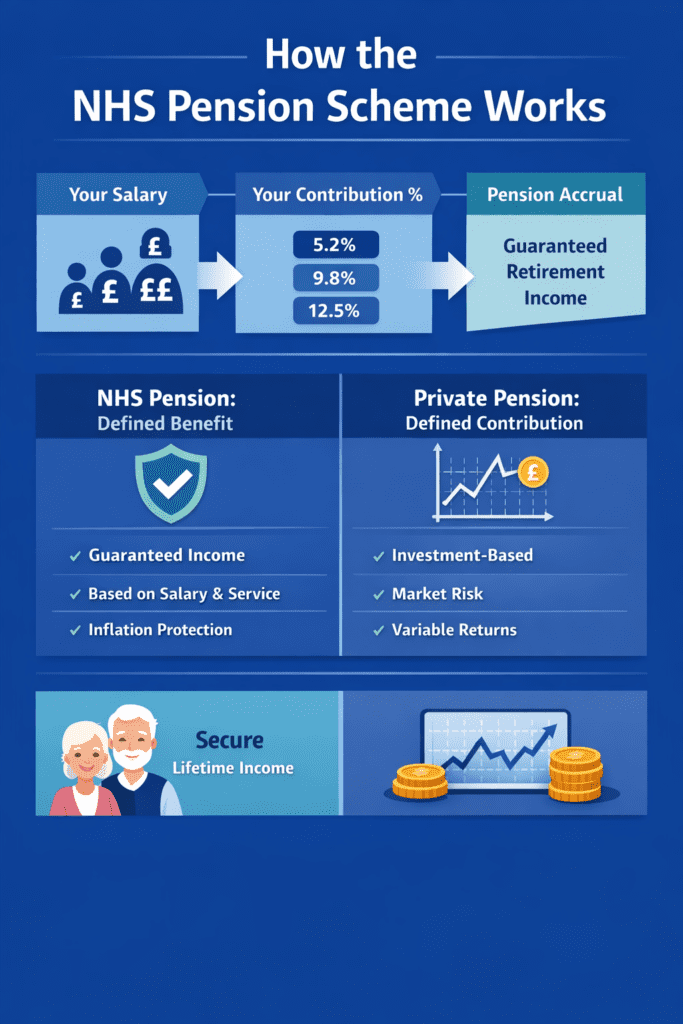
The NHS Pension Scheme is a defined-benefit pension, meaning your retirement income is based on a formula rather than investment performance. In simple terms, you build up a guaranteed pension each year you remain a member, calculated using your pensionable earnings.
Unlike private pensions where outcomes depend on markets, the NHS Pension provides certainty — a key reason many healthcare professionals remain enrolled throughout their careers.
How Contributions Work (And Why They Matter)
NHS pension contributions are tiered, meaning the percentage you pay depends on your pensionable income. While contribution rates may feel high — particularly for senior clinicians — they also unlock valuable benefits that are difficult to replicate elsewhere.
Key points to understand:
- Contributions are taken before tax, making them tax-efficient
- Higher earners contribute more but also accrue higher guaranteed benefits
- Contributions fund not just retirement income, but additional protections
Understanding how your contributions compare to the long-term value of benefits is central to answering whether staying in the NHS Pension Scheme is worthwhile.
Key Benefits of Staying in the NHS Pension Scheme
For many healthcare professionals, the NHS Pension remains one of the strongest financial benefits of working in the public sector.
1. Guaranteed Income for Life
Your pension is paid for life and is not dependent on market performance. This stability is particularly valuable during periods of economic uncertainty.
2. Inflation Protection
Your accrued pension increases over time in line with inflation, helping to preserve purchasing power throughout retirement.
3. Valuable Death-in-Service Cover
Active members benefit from death-in-service provisions, offering financial security to loved ones — protection often overlooked when considering opting out.
4. Ill-Health Retirement Benefits
If illness prevents you from continuing your role, the scheme can provide early retirement support, which private arrangements may not match.
The Drawbacks: What Healthcare Professionals Should Consider
Despite its strengths, the NHS Pension Scheme is not without limitations.
Higher Monthly Contributions
Compared to many private pensions, NHS contributions can significantly reduce take-home pay, particularly for consultants, GPs, and senior clinicians.
Limited Flexibility
Accessing benefits early can result in reductions, and the scheme offers less flexibility than some private pension arrangements when it comes to drawdown options.
Tax Complexity for High Earners
Annual Allowance considerations can create unexpected tax charges if pension growth is not carefully monitored — especially for those with rising incomes.
This is where specialist advice becomes critical. Working with a medical accountancy firm that understands NHS pensions can prevent costly surprises. Learn more about our tailored support on our services page.
Is Opting Out Ever a Good Idea?
Some healthcare professionals consider opting out to improve short-term cash flow, particularly during periods of financial pressure. However, opting out should never be a decision made lightly.
Potential consequences include:
- Loss of future guaranteed pension accrual
- No death-in-service benefits while opted out
- Reduced long-term retirement security
For most, a full opt-out is rarely the best solution. Alternative strategies — such as reviewing additional private savings or adjusting overall tax planning — often provide better outcomes.

NHS Pension vs Private Pension: A Strategic Comparison
Private pensions can play a useful role in broader retirement planning, but they typically involve higher risk. Investment returns are uncertain, and poor market performance close to retirement can significantly reduce outcomes.
The NHS Pension, by contrast, acts as a stable foundation. Many healthcare professionals benefit most from:
- Keeping their NHS Pension
- Supplementing with private pensions or ISAs
- Integrating tax planning across all income sources
Using professional tools and modelling scenarios can make this clearer. Our online calculators can help you explore different retirement outcomes.
Tax Planning and Long-Term Pension Strategy
Tax efficiency is often the deciding factor when evaluating whether it is worth staying in the NHS Pension Scheme. Strategic planning can:
- Manage Annual Allowance exposure
- Balance pension growth with other investments
- Reduce unnecessary tax liabilities
This level of planning requires specialist insight — not generic financial advice. At Kudos Accounting, we work exclusively with healthcare professionals to ensure pensions, tax, and long-term goals align. You can learn more about our expertise on our about us page.
Practical Tips for Healthcare Professionals
- Review your annual pension statement carefully
- Monitor pension growth alongside taxable income
- Use calculators before making opt-out decisions
- Seek specialist advice before major career changes
For ongoing insights, guidance, and updates, visit our blog section.
Final Verdict: Is It Worth Staying in the NHS Pension Scheme?
For the majority of healthcare professionals, yes — staying in the NHS Pension Scheme remains financially worthwhile. Its guaranteed income, inflation protection, and additional benefits provide long-term security that is extremely difficult to replicate elsewhere.
That said, individual circumstances matter. Income level, career stage, tax exposure, and retirement goals should all inform your decision. With the right planning, the NHS Pension can remain a cornerstone of a strong and sustainable retirement strategy.
Frequently Asked Questions
In most cases, yes. However, high earners should carefully manage their tax exposure. With strategic planning, it’s often possible to reduce unnecessary tax charges while retaining the long-term benefits of the NHS Pension Scheme.
Yes, it is possible to opt out and rejoin later. However, even temporary opt-outs can reduce long-term pension growth and result in lost benefits during the period you are not contributing.
The NHS Pension provides guaranteed income and inflation protection, while private pensions offer greater flexibility but carry investment risk. Many medical professionals benefit from using both as part of a balanced retirement strategy.
Often, yes. Even contributions made later in your career can generate valuable guaranteed income. However, individual modelling is essential to ensure the benefits outweigh any potential tax implications.
Absolutely. Pension decisions are complex, and mistakes can be costly. Specialist medical accountancy advice helps ensure your decisions align with your long-term financial and retirement goals.